

Kuala Lumpur Travel Guide
Discover Malaysia’s capital, from iconic landmarks and cultural neighborhoods to local food, shopping and memorable city experiences.
Kuala Lumpur is Malaysia’s capital and its busiest, most varied city. In a single afternoon you can cross a colonial-era square, walk a street of Chinese shophouses, pass a Hindu temple and end up under a skyline of glass towers. That mix is the real attraction: no single era or community defines the city, and each leaves its mark on the architecture, the markets and the menus.
The name is usually explained as “muddy confluence”, after the meeting of two rivers where the city began. Today the old centre sits beside the modern business and shopping districts, so a visit works well as a short city break and also as a base for day trips.
This guide covers the main sights, how to get in and around, how the weather shapes a day, two suggested itineraries and what to check before you travel. It is information only: opening arrangements, fares and schedules change, so confirm them close to your trip.
Top Attractions in Kuala Lumpur
Two places are worth building a morning around. The rest sit close enough together to pair up on foot or by a short rail ride.
Historic centre
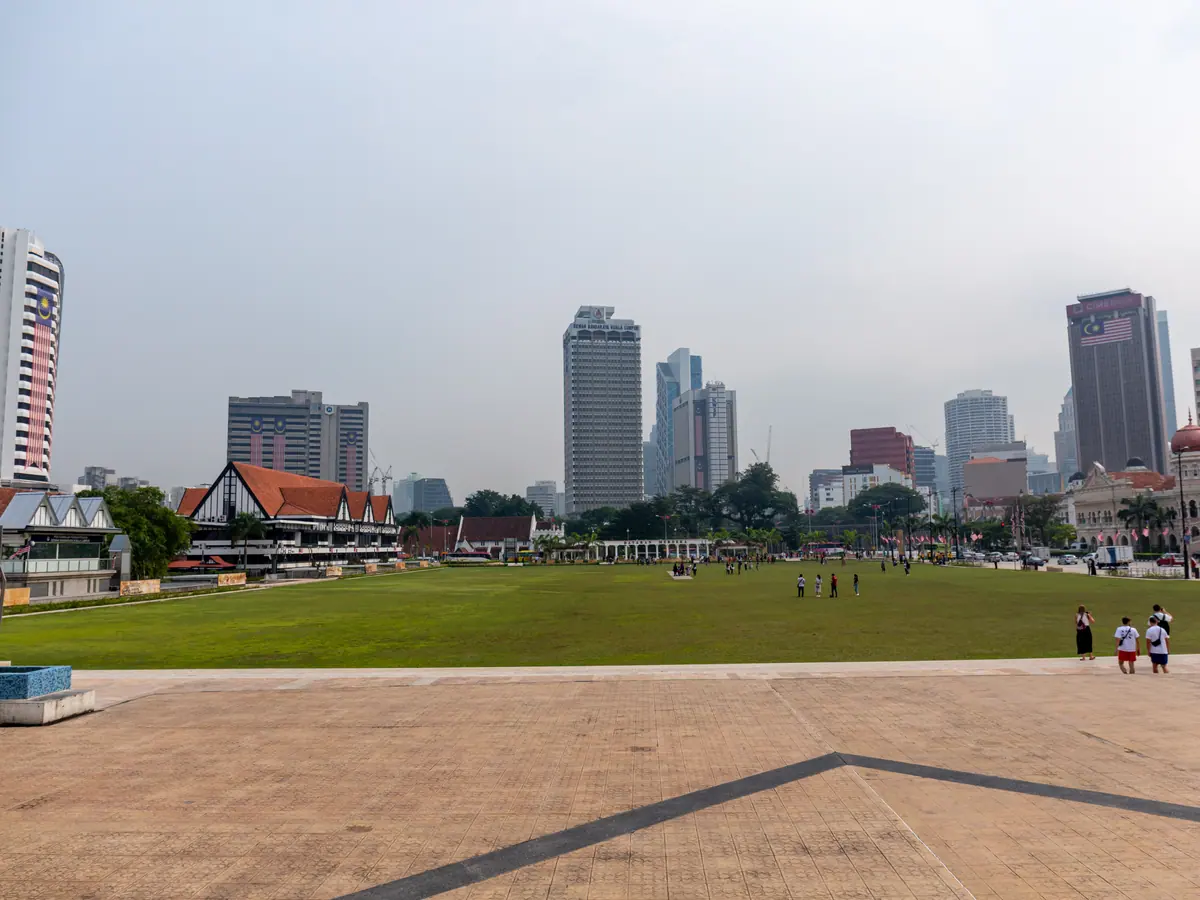
Merdeka Square
The open lawn at the heart of the old colonial quarter is where the Malayan flag was raised for the first time at independence, in the first minutes of 31 August 1957. A tall flagpole marks the spot, and the buildings around the square tell the story of the city’s early administration, from the Tudor-style Royal Selangor Club to the Moorish-style government offices opposite.
Go early or late in the day: the lawn has little shade.
North of the centre
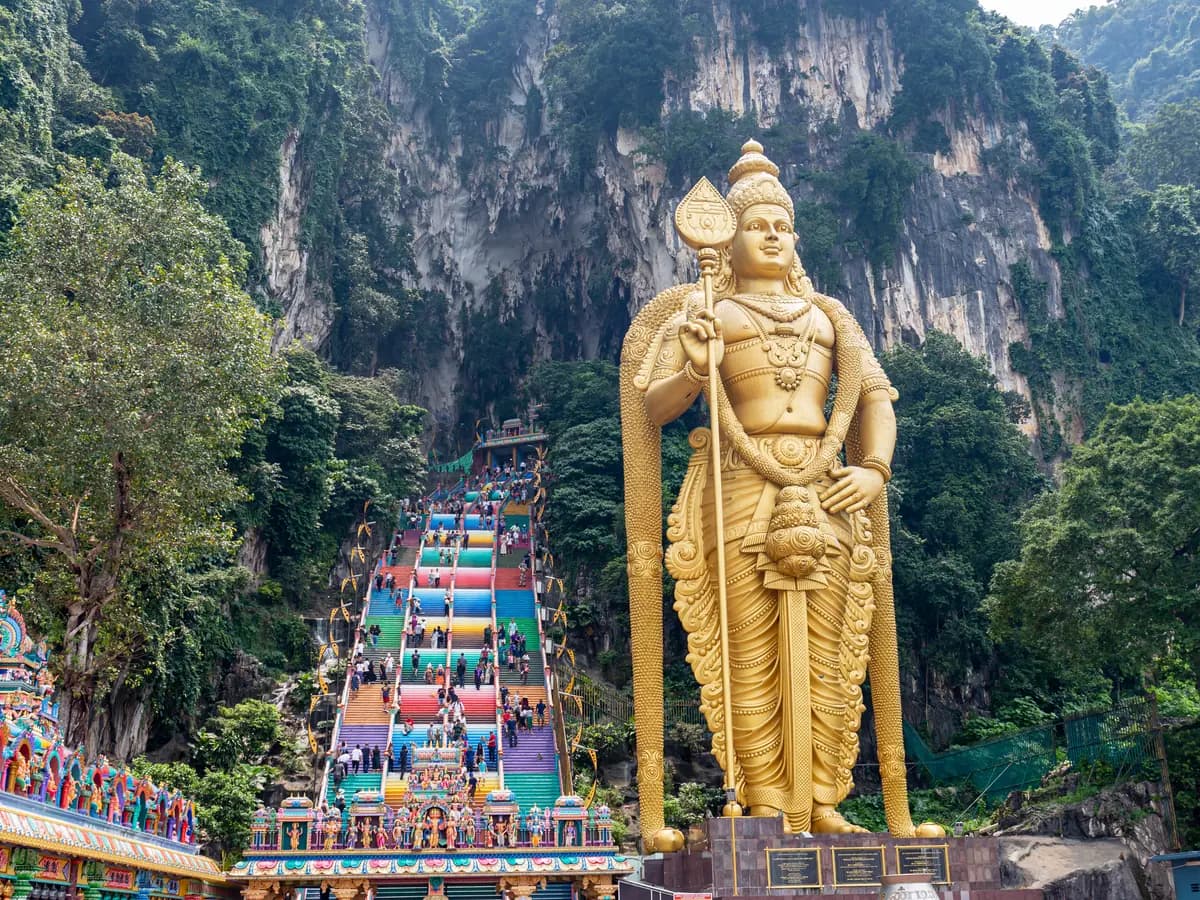
Batu Caves
A limestone hill riddled with caves, and the site of a Hindu temple complex dedicated to Murugan. A tall golden statue stands at the foot, and a stairway painted in bands of colour climbs to the main cave temple. The setting, with sheer green rock above the steps, is as memorable as the shrines.
Batu Caves lies in Gombak, in Selangor state just outside Kuala Lumpur, roughly 13 km north of the centre. A commuter rail line serves a station beside the entrance.
Dress respectfully, keep food out of sight of the monkeys, and expect large crowds around the Thaipusam festival.
KLCC
Petronas Twin Towers
The towers are the city’s signature shape. Their stepped, tapering outline is based on Islamic geometric patterns, and a sky bridge joins them part of the way up. At the base are the Suria KLCC shopping centre and KLCC Park, whose lake and fountains make the easiest place to see the towers from the ground.
Visits to the sky bridge and observation deck are ticketed and limited. Check the official booking arrangements before you travel.
Bukit Nanas
KL Tower
A telecommunications tower on Bukit Nanas, a small hill that still carries a patch of forest reserve beside the Bukit Bintang area. Its viewing level looks across the whole city, and it has one advantage over the Petronas Towers: the twin towers are part of the view.
Check current visiting arrangements on the day.
Merdeka Square
Sultan Abdul Samad Building
Completed in the late 1890s, this former administrative building faces the square with a clock tower, copper-coloured domes and rows of arches in a Moorish style. It is best appreciated from the lawn opposite, ideally in the light of late afternoon.
Interior access varies, so treat it as a sight to admire from outside unless you have confirmed otherwise.
Pasar Seni
Central Market
A heritage market building in an Art Deco style, now filled with crafts, textiles, souvenirs and small eateries. It is a convenient place to look at Malaysian handicrafts and to cool off between Merdeka Square and Chinatown.
Next to Central Market
Chinatown and Petaling Street
A covered street market with stalls, snacks and the bustle of a working neighbourhood. Nearby streets hold Chinese temples and a Hindu temple, and the old mosque at the river confluence is a short walk away, which shows the city’s communities living side by side.
Stall prices are often negotiable. Keep bags closed in the crowds.
Shopping district
Bukit Bintang
The city’s main shopping and entertainment district, with malls such as Pavilion Kuala Lumpur and Lot 10, and, after dark, the open-air food street of Jalan Alor. It is lively late into the evening and easy to reach by monorail.
Things to Do
Beyond the famous sights, these are the experiences that fill most visitors’ days.
Landmarks and viewpoints
Pair the skyline views: the Petronas Towers from KLCC Park at dusk, the city from KL Tower’s viewing level, and the old centre from Merdeka Square. Different heights and distances show very different cities.
Heritage and culture
Walk from the colonial buildings around Merdeka Square to the river confluence and Masjid Jamek, then on to the Hindu and Chinese temples near Petaling Street. For an indoor, quieter visit, the Islamic Arts Museum Malaysia is a well-known option near the Lake Gardens.
Food and markets
Eat widely. Hawker stalls, food courts, night markets and air-conditioned restaurants all sit within a few stops of each other. The food section below covers the dishes worth trying.
Shopping neighbourhoods
Bukit Bintang is the large-mall district, Suria KLCC suits a rainy hour near the towers, and Central Market and Petaling Street are for crafts, souvenirs and bargaining.
Family-friendly options
KLCC Park has open space and a children’s play area, and the Perdana Botanical Gardens (the Lake Gardens) offer shaded paths. Indoor attractions such as Aquaria KLCC give a break from the heat. Confirm operating arrangements before you plan around any of them.
Photography
Early morning and the hour before sunset give softer light and lighter crowds. The twin towers reflect in KLCC Park’s lake, the colourful steps at Batu Caves reward a wide lens, and the arches of Merdeka Square catch afternoon sun.
Best Time to Visit
Kuala Lumpur has a tropical climate: warm and humid throughout the year, without a cool season. That makes the question less about the best month and more about the best hour. Heat builds through the late morning and early afternoon, and showers are common in the afternoon or evening, sometimes heavy and brief.
Rain can fall in any month, and some months are wetter than others, so a dry visit can never be taken for granted. A plan that moves outdoor sightseeing to the morning and keeps museums, malls and covered markets for the middle of the day works in nearly any season.
Festivals shape the calendar more than the weather does. Chinese New Year, Hari Raya, Deepavali and Thaipusam bring celebrations, bigger crowds at some sites and changed opening arrangements in some places, so check dates when you choose your travel window. Air quality can also be poor during occasional regional haze, so it is worth checking local advisories before you go.
Getting to Kuala Lumpur and Getting Around
The city is easy to reach and, with a little planning, easy to move around without a car.
Arriving
Most international visitors arrive at Kuala Lumpur International Airport (KLIA), which lies in Sepang, Selangor, well south of the city. It has two terminals, KLIA Terminal 1 and klia2, so confirm which one your airline uses.
From the airport you can take an airport rail service to KL Sentral, the city’s main transport hub (a non-stop express and a slower service that stops on the way), or use airport coaches, taxis or ride-hailing. Overland arrivals from elsewhere in Malaysia and neighbouring countries often reach KL Sentral or the large coach terminal at Bandar Tasik Selatan, known as TBS.
Fares, schedules and operating arrangements change. Check the current options with the operator or your airline before you travel, and allow time at both ends.
Moving around
- Rail
- The rapidKL network includes light rail (LRT), MRT lines and a monorail, and a commuter rail line (KTM Komuter) reaches places such as Batu Caves. KL Sentral is the main interchange. Rail is usually the most predictable way to cross the city.
- Buses
- City buses fill gaps between stations and serve neighbourhoods the trains do not. They suit travellers who are comfortable with route maps and who are not in a hurry.
- Taxis and ride-hailing
- Useful late at night, with luggage, and in the heat. Traffic can be heavy at peak hours, so a short trip may take longer than the map suggests.
- Walking
- Sensible in compact areas such as the Merdeka Square–Central Market–Petaling Street cluster and around KLCC. Distances look short on a map but feel longer in the humidity, and pavements can be uneven.
Ticketing options, fares and routes change. Check current arrangements before relying on any one method.
Suggested Itinerary
These are suggested plans, not fixed schedules. Each day groups places that lie close together. Leave room for heat, rain and the pleasure of wandering.
Day 1
Old centre by morning, skyline by evening
Merdeka Square and the Sultan Abdul Samad Building
Start where the city’s modern history began, while the lawn is still cool, and look at the buildings around it.
Masjid Jamek and the river confluence
A short walk to the old mosque at the spot where the city got its name.
Central Market and Petaling Street
Browse crafts, then find lunch in the surrounding streets.
A cooler stretch in the afternoon
Spend the hottest hours somewhere covered: a mall in Bukit Bintang, or a museum.
KLCC at dusk
Walk KLCC Park as the light fades, see the towers lit up and finish with dinner nearby.
If you only have one day, this is the plan to follow.
Day 2 · optional extension
Batu Caves, gardens and street food
Batu Caves early
Go in the morning to climb the steps in cooler air and before the crowds. Allow generous time for the journey out and back.
Return via KL Sentral
Use the rail interchange to head into the city for a late lunch.
Lake Gardens and the Islamic Arts Museum
A greener, calmer afternoon in the Perdana Botanical Gardens, with the museum as an indoor alternative.
Jalan Alor in the evening
End in Bukit Bintang with a stroll and dinner at the open-air food street.
Swap in KL Tower or more shopping if gardens and museums do not appeal.
Food and Local Experiences
Malaysia’s food reflects its Malay, Chinese and Indian communities, and in Kuala Lumpur you can eat across all three in a single day. The easiest way in is to eat where locals eat: hawker stalls, food courts, kopitiams (traditional coffee shops) and mamak stalls, the Indian-Muslim eateries that stay open late.
Many places are halal, while some Chinese-run stalls serve pork, so look for halal signs if that matters to you. If you are cautious about spice, ask for a milder version, and carry water, because the sauce is usually where the heat is.
Travel Preparation
Before you book, check what applies to you. Entry rules depend on your nationality and your purpose of travel, and they can change.
- Check that your passport is valid for your travel dates, and confirm the validity rule with the Malaysian authorities.
- See if your nationality needs a visa for a visit, and which documents are usually listed for it.
- Check whether you need to complete the Malaysia Digital Arrival Card (MDAC) before arrival.
- Keep your supporting travel documents and arrival details together and easy to reach.
A visa or an MDAC is not a guarantee of admission: the decision at the border rests with the immigration officer.
Practical Tips
Small habits that make a city trip easier.
Plan outdoors around the weather
Put the walking and the viewpoints in the morning, and keep an indoor alternative ready for showers.
Watch your belongings
In crowded markets, malls and on public transport, keep bags zipped and in front of you, and keep your phone away from the edge of the pavement.
Dress for heat and respect
Light, breathable clothing and comfortable closed footwear suit long days. Cover shoulders and knees at temples and mosques, and carry something to put on.
Keep documents accessible
Carry your passport and arrival details securely, keep copies separately and store originals safely when you are not travelling.
Leave time between things
Traffic, queues and heat slow everything down. Two or three main stops a day is usually plenty.
Kuala Lumpur Travel FAQs
What is Kuala Lumpur best known for?
Mostly for the Petronas Twin Towers and the modern skyline around them, but also for how many communities share the city. Food, markets, mosques, temples and colonial-era buildings all sit within a few kilometres of each other.
How many days should visitors spend in Kuala Lumpur?
Two days cover the main sights at a comfortable pace: one for the old centre and KLCC, one for Batu Caves and a quieter afternoon. One day works if you pick a single cluster, and three or four days leave room for gardens, museums and longer meals.
What are the main attractions in Kuala Lumpur?
The Petronas Twin Towers, KL Tower, Merdeka Square with the Sultan Abdul Samad Building, Batu Caves, Central Market, Chinatown and Petaling Street, and Bukit Bintang for shopping and street food.
Is Kuala Lumpur suitable for a short city break?
Yes. The main sights fall into a few compact clusters, the rail network links them, and the airport has a direct rail connection to the city centre. The main trade-off is heat, so build in indoor time.
How can visitors get around Kuala Lumpur?
By rail (LRT, MRT, monorail and commuter trains), by bus, by taxi or ride-hailing, and on foot within neighbourhoods. KL Sentral is the main interchange. Check current routes, tickets and fares before you rely on one method.
What should visitors know about the weather?
It is warm and humid year-round, and showers can arrive in any month, often in the afternoon. Do outdoor sightseeing early, carry an umbrella, drink water and plan indoor stops for midday.
Can Kuala Lumpur be explored without renting a car?
Easily. The rail network, ride-hailing and taxis cover the main sights, including Batu Caves, and parking in the centre is rarely worth the trouble. A car is mainly useful for trips beyond the city.
Do international tourists need a Malaysia visa or MDAC?
It depends on your nationality and your purpose of travel. Some visitors need a visa, and many visitors must complete the Digital Arrival Card before arrival. Use the site’s requirements checker and the eVisa, Documents and MDAC pages to see what is usually listed, and confirm with the Malaysian authorities.
Plan Your Trip to Malaysia
Before you go, check what applies to you.