
Taste of Malaysia 2026: 30 Malaysian Foods Every Tourist Must Try
Complete guide to 30 must-try Malaysian dishes for tourists. Discover authentic hawker stall foods, regional specialties, food safety tips, and insider recommendations for experiencing Malaysia's incredible culinary culture.
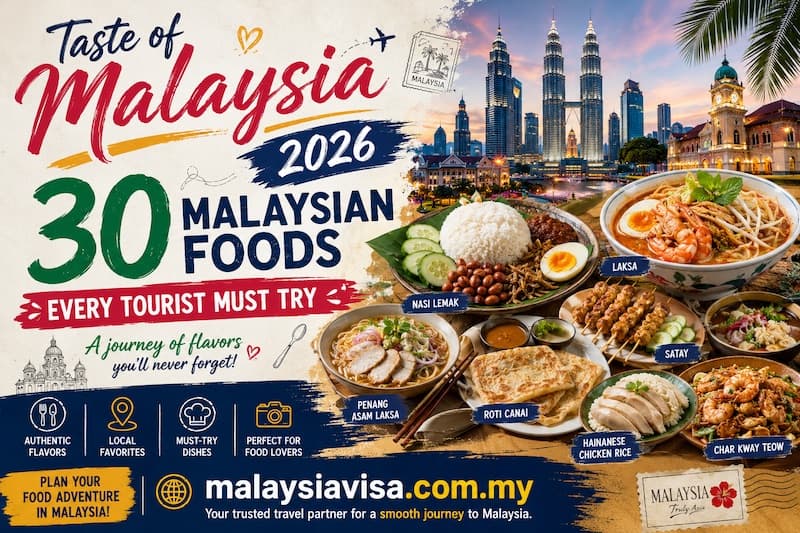
Malaysia's culinary landscape is one of Asia's most exciting and diverse food destinations. Whether you're a first-time visitor or a seasoned traveler, Malaysian cuisine offers an extraordinary tapestry of flavors, techniques, and cultural traditions that reflect the country's multicultural heritage. From the bustling hawker centers of Kuala Lumpur to the street food markets of Penang, Malaysia's food scene is an adventure in itself—one that deserves equal attention alongside cultural landmarks and natural attractions. Malaysian cuisine is more than sustenance—it's a cultural experience. The country's three major civilizations (Malay, Chinese, and Indian) have created a unique fusion cuisine that's unlike anything found elsewhere in Southeast Asia. Food is woven into Malaysian social fabric, family traditions, and tourism experiences. Trying authentic Malaysian food isn't just dining; it's cultural immersion.
- Nasi Lemak — Aromatic coconut rice with anchovies, peanuts, boiled eggs, and sambal
- Laksa — Spiced noodle soup with coconut broth and fresh herbs
- Satay — Grilled meat skewers with peanut sauce
- Char Kway Teow — Stir-fried flat rice noodles with shrimp and Chinese sausage
- Roti Canai — Flaky Indian flatbread with curry dipping sauce
- Rendang — Slow-cooked meat in coconut milk and spice paste
- Mee Goreng — Fried noodles with vegetables and spicy sauce
- Dim Sum — Steamed bite-sized dumplings with varied fillings
- Teh Tarik — Pulled milk tea (beverage)
- Roti Jala — Net crepes with curry sauce
- Kaya Toast — Egg custard on toast with soft-boiled eggs
- Kuih Kuih — Malaysian bite-sized desserts
- Apom Balik — Sweet pancake with peanuts and palm sugar
- Nasi Kuning — Yellow coconut rice
- Udang Galah — Giant freshwater prawns
- Gulai Kepala Ikan — Fish head curry
- Otak-Otak — Spiced fish cake in banana leaf
- Sambal Belacan — Shrimp paste condiment
- Tosai — Indian crepe with sambar and chutney
- Cendol — Shaved ice with coconut milk and pandan noodles
- Soto Ayam — Turmeric chicken soup
- Perkedel — Spiced potato fritters
- Gado-Gado — Vegetable salad with peanut sauce
- Papadum — Crispy lentil wafer
- Martabak — Stuffed pancake with savory or sweet filling
- Longtong — Compressed rice cake
- Pisang Goreng — Fried bananas
- Tahu Goreng — Fried tofu with sweet chili sauce
- Lontong — Rice cake in meat gravy
- Kopi — Malaysian coffee with condensed milk
Hawker Centers
The heart of Malaysian food culture, hawker centers feature dozens of individual stalls specializing in specific dishes. Ordering is simple: find your desired dish, order, pay, and eat. No table service, minimal cost. Each city has multiple hawker centers operating morning through evening.
Night Markets
Evening markets feature countless street food vendors, dessert stalls, and beverage stands. The energetic atmosphere makes night markets social experience. Night markets typically operate 6 PM-midnight. Penang's Gurney Drive and Kota Kinabalu's night market are notable.
Wet Markets
Traditional morning markets feature fresh produce, meat, and seafood. While not dining venues, wet markets offer ingredients and pre-prepared food. Exploring wet markets provides cultural insight and food sourcing understanding.
Restaurants
Malaysian restaurants range from casual hawker-style establishments to upscale fine dining. Mid-range restaurants offer air conditioning and table service while maintaining reasonable prices. Fine dining Malaysian restaurants showcase traditional cuisine elevated.
Kuala Lumpur offers every Malaysian cuisine type with highest concentration of fine dining restaurants. Petaling Street offers budget food and cultural experience. Penang maintains reputation as Malaysia's culinary capital with superior street food quality and variety. Penang specialties include Penang laksa, char kway teow, and unparalleled hawker culture. Georgetown's food scene attracts food tourists specifically. Malacca's hybrid Portuguese-Malay cuisine creates unique offerings unavailable elsewhere. Chicken rice ball represents Malacca specialty. East Malaysia—Sabah and Sarawak—features indigenous ingredients and preparations creating unique dishes. Sabah specializes in seafood and udang galah. Sarawak features Iban and Dayak influences unavailable in Peninsular Malaysia.
Malaysian food is generally safe. Hawker stalls with high turnover and visible food preparation pose minimal risks. Avoid raw or undercooked meat. Street food is typically safer than risky restaurants. Verify restaurant cleanliness before dining. Tap water is potable but bottled water offers extra security. Heat and spice can overwhelm unaccustomed palates. Build spice tolerance gradually. Request milder versions if dishes prove too hot. Most vendors accommodate requests gladly.
- Is Malaysian street food safe? Yes. High vendor turnover and visible preparation ensure safety. Food poisoning from street food is uncommon. Verify vendor popularity and hygiene before eating.
- What if I'm vegetarian? Malaysia offers numerous vegetarian options including gado-gado, tahu goreng, and curry-based dishes. Indian influence provides vegetarian curries. Communicate dietary restrictions clearly.
- How much should I expect to spend on food? Budget travelers spend RM 30-50 daily. Mid-range travelers spend RM 60-120 daily. Hawker meals cost RM 5-15. Restaurant meals cost RM 25-60. Fine dining costs RM 100+.
- What's the best time to eat Malaysian food? Breakfast features kaya toast and roti canai. Lunch showcases noodle dishes. Dinner emphasizes grilled foods and curries. Night markets feature desserts and snacks. Peak times: 11:30 AM-1:30 PM and 6:30 PM-8:30 PM.
- Should I tip at hawker stalls? Tipping isn't expected or necessary. Rounding up is appreciated but optional. Fine dining restaurants expect 10% tip.
- Are there food allergies I should know about? Peanuts appear frequently in Malaysian food. Shellfish features prominently. Communicate allergies clearly.
- What's the spiciest Malaysian dish? Sambal belacan and curries can be intensely spicy. Request 'kurang pedas' (less spicy) from vendors.
- Can I find familiar foods? Yes. International chains operate throughout Malaysia. Supermarkets stock imported foods. Western restaurants available. However, authentic Malaysian food offers superior value.
- What food should I try first as a tourist? Start with Nasi Lemak—it encapsulates Malaysian cuisine. Progress to laksa, satay, and char kway teow.
- How do I find authentic food? Eat where locals eat. Hawker centers with queues indicate quality. Avoid tourist-focused restaurants. Smaller stalls specializing in single dishes typically exceed multi-dish establishments.
Need a Malaysia eVisa?
Contact us to check whether our visa service is suitable for your passport, travel purpose and application location before applying.
Apply if you need a visaNot sure? Check visa requirements
Related Articles
Complete Kuala Lumpur Travel Guide: Where to Stay, What to See & How to Get Around
Comprehensive Kuala Lumpur travel guide with insider tips on attractions, neighborhoods, food, transportation, and practical information for first-time visitors exploring Malaysia's vibrant capital.
Penang Travel Guide: Georgetown's Heritage, Beaches & Culinary Treasures
Complete Penang travel guide covering Georgetown's UNESCO architecture, beaches, street food, attractions & practical tips. 3-4 day itinerary for first-time visitors.
Best Time to Visit Malaysia — Weather, Seasons & Complete Packing Guide
Complete guide to Malaysia's weather patterns by month, monsoon seasons, packing tips, and pricing cycles. Includes month-by-month breakdown, regional variations, and activity recommendations.
Malaysia 2026 Festivals and Events Calendar: Key Dates for Trip Planning
A 2026 calendar of Malaysia's major festivals and events, including Chinese New Year, Thaipusam, Hari Raya Aidilfitri, Wesak Day, Hari Raya Aidiladha, Merdeka Day, Malaysia Day, Deepavali and the Formula 1 race at Sepang. Dates follow the official 2026 public holiday schedule and can change.
Why Malaysia Is One of Asia's Must-Visit Destinations in 2026
Discover why Malaysia is Asia's best-kept secret. Culturally diverse, incredibly affordable, exceptionally safe, and offering unbeatable value compared to Thailand, Vietnam, and Indonesia.