
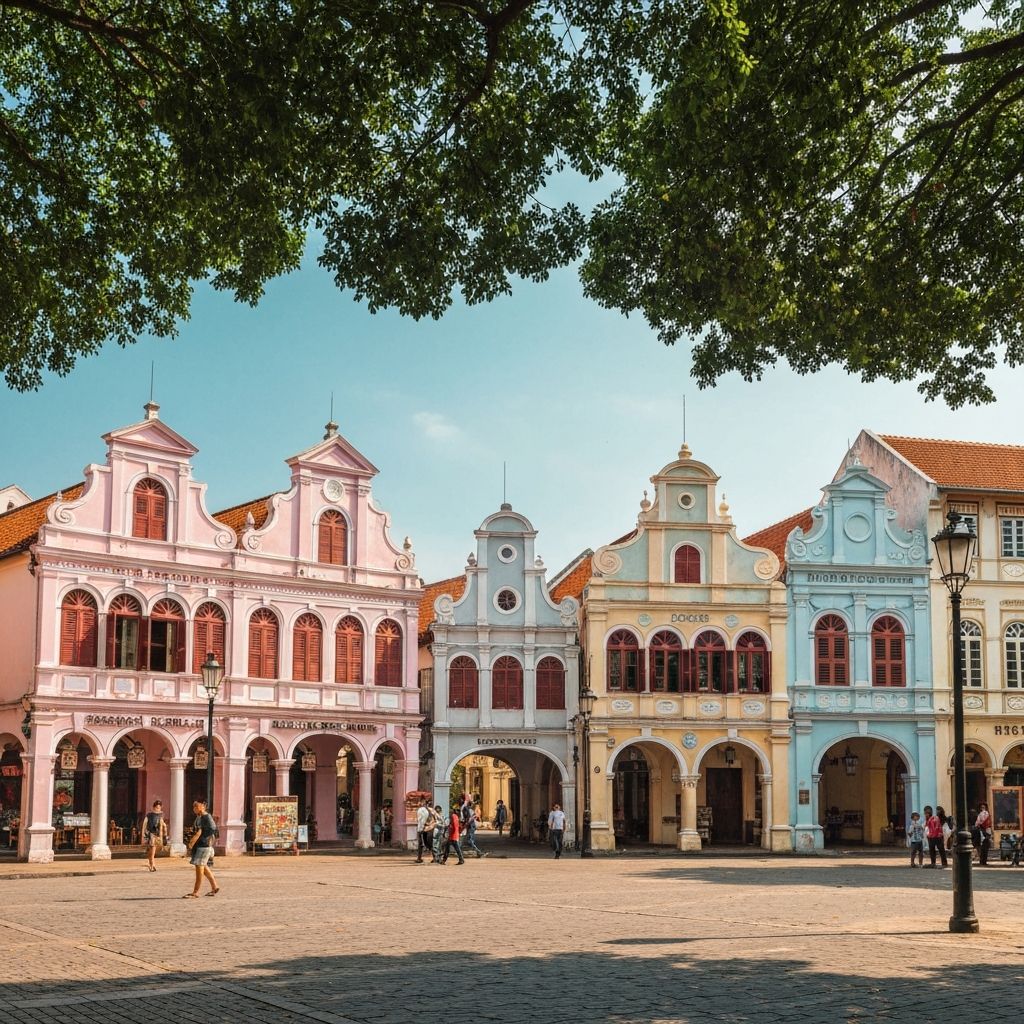
Malacca
Journey through six centuries of multicultural heritage in this UNESCO-recognized historic treasure
Location
Southern Peninsula, two hours south of Kuala Lumpur
World Heritage
Protected UNESCO status awarded in 2008
Key Highlights
Historic buildings, Peranakan heritage, vibrant street culture
Discover Malaysia's Historic Gem
Step into Melaka, where centuries of Asian and European influences have woven together an extraordinary tapestry of culture, architecture, and tradition. This coastal settlement emerged in the early 1400s when Prince Parameswara established what would become one of Southeast Asia's most influential trading hubs. The city's position along vital maritime routes attracted merchants from China, India, Arabia, and beyond, creating prosperity that eventually drew European powers seeking control of the lucrative spice trade. Portuguese conquest in 1511 marked the beginning of colonial rule that passed through Dutch and British hands, each leaving distinct architectural and cultural imprints. This succession of rulers created a remarkable fusion of traditions still visible today in the city's streets, temples, churches, and cuisine. Recognition came in 2008 when UNESCO designated Melaka's historic core as a World Heritage Site, acknowledging its exceptional representation of Asian multicultural heritage. Modern Melaka seamlessly blends historical preservation with contemporary life, inviting travelers to explore layers of history within its compact, walkable center.
Colonial Landmarks and Heritage Buildings
The heart of colonial Melaka centers around the striking red buildings of Dutch Square, where the Stadthuys stands as Southeast Asia's oldest surviving Dutch structure from 1650. This massive salmon-colored building originally served as the Dutch governor's residence and administrative offices, now transformed into a museum showcasing regional history through artifacts, traditional dress, and period exhibits. Next door, Christ Church rises with thick walls and hand-carved ceiling beams fashioned from individual tree trunks, its construction completed in 1753 as the centerpiece of Dutch religious life. The square itself features Victorian-era fountains and serves as a popular gathering spot surrounded by colorful trishaws. Climbing the hill behind reveals the ruins of St. Paul's Church, originally constructed by Portuguese Catholics in 1521 and later repurposed by Dutch Protestants. These atmospheric ruins offer sweeping views across the modern city and house centuries-old tombstones inscribed in Latin and Dutch. The legendary missionary Francis Xavier was temporarily buried here before his remains traveled to Goa. Down the slope, the Porta de Santiago gateway stands alone as the final remnant of the Portuguese fortress called A Famosa, built following their 1511 conquest. British forces demolished most of the fort in the early 1800s, sparing only this gate thanks to Sir Stamford Raffles' intervention. Together, these structures tell the story of competing European powers and their quest for dominance in Asian waters.
Chinatown and Peranakan Culture
Narrow Jonker Street pulses with energy as Melaka's Chinatown centerpiece, its heritage shophouses packed with antique dealers, art studios, traditional medicine shops, and contemporary cafes. Every Friday through Sunday evening, this historic thoroughfare transforms into a sprawling night bazaar where hundreds of vendors sell everything from local snacks to vintage collectibles beneath strings of glowing lanterns. The neighborhood showcases Peranakan heritage, the distinctive culture born from Chinese-Malay intermarriage spanning generations. Wealthy Straits Chinese families, known as Baba Nyonya, developed elaborate customs blending both traditions. The Baba Nyonya Heritage Museum occupies a lovingly maintained ancestral mansion filled with ornate blackwood furniture inlaid with mother-of-pearl, intricate wedding costumes embroidered with gold thread, and delicate porcelain collections. Each room reveals aspects of Peranakan daily life, from formal reception halls to private living quarters. Nearby, Cheng Hoong Teng Temple has welcomed worshippers since 1645, making it Malaysia's oldest functioning Chinese temple. Its architecture combines southern Chinese styles with decorative elements unique to Melaka, including ceramic figurines adorning the sweeping rooflines. The adjacent Kampung Kling Mosque presents an architectural curiosity with its Sumatran-influenced design rarely found elsewhere in Malaysia, built in 1748 by Tamil Muslim traders. Adding to the religious diversity, Sri Poyyatha Vinayagar Moorthi Temple serves the Hindu community as Melaka's oldest Indian temple. Walking these interconnected lanes reveals hidden courtyards, pre-war shopfronts, family businesses operating for generations, and the enduring spirit of communities who shaped this remarkable city.
Museums and Historical Exhibitions
Melaka's dedication to preserving its past manifests in an exceptional collection of museums covering virtually every aspect of local history and culture. The Maritime Museum occupies a full-scale replica of a Portuguese trading vessel, its hull containing exhibits exploring Melaka's golden era as a major port through navigational instruments, trading goods, and ship models. Close by, the Royal Malaysian Navy Museum displays military hardware and maritime defense history. The stately Proclamation of Independence Memorial building witnessed crucial meetings leading to Malaysian independence, now housing exhibits documenting the nation's journey to sovereignty. Architecture enthusiasts admire the Sultanate Palace Museum, a magnificent wooden reconstruction of the 15th-century royal palace complete with detailed dioramas depicting court ceremonies, royal customs, and daily sultanate life before European arrival. Specialized collections include the Stamp Museum's extensive philatelic displays, the Beauty Museum's exploration of cosmetic traditions across cultures, and the Kite Museum's colorful array of traditional Malaysian wau designs. The Malay and Islamic World Museum examines Islam's profound influence throughout the Malay archipelago. Additional venues focus on youth movements and educational development. While history buffs could spend days exploring these diverse collections, most visitors select several museums aligned with personal interests. The concentration of museums within walking distance makes it easy to customize your historical exploration based on available time and curiosity.
River Cruises and Waterfront Revival
Once neglected and polluted, the Melaka River has undergone dramatic transformation into a scenic attraction lined with vibrant murals, heritage buildings, and inviting waterfront spaces. Leisure cruises departing from near Dutch Square provide 45-minute journeys downstream to the estuary, offering fresh perspectives of the city from water level. Passengers drift past enormous street art murals depicting local legends and historical scenes, converted warehouses housing galleries and restaurants, traditional kampung dwellings on stilts, and sleek modern developments. The revitalized riverbanks have become favorite promenades for walking and cycling, especially enchanting after sunset when architectural lighting illuminates historic structures and palm trees sway in coastal breezes. Numerous riverside dining establishments specialize in Nyonya delicacies, Portuguese-influenced dishes, and international cuisine, many featuring terrace seating with water views. Weekend evenings often bring cultural performances to riverfront stages. Water taxis now provide convenient connections between attractions along the river corridor. The success of Melaka's river rehabilitation project has inspired other Malaysian cities to undertake similar urban renewal initiatives. This waterway that once served as the city's commercial lifeline now functions as a scenic spine connecting neighborhoods while showcasing how thoughtful planning can harmoniously blend heritage conservation with modern amenities and environmental improvement.
Culinary Traditions and Local Flavors
Melaka's greatest cultural achievement may be its cuisine, particularly Nyonya cooking that emerged as Chinese immigrants adapted their recipes using Malay spices and techniques. This culinary fusion developed over centuries as Chinese men who married local women created households blending both traditions. The resulting dishes feature complex spice pastes, coconut milk bases, and cooking methods unique to Peranakan culture. Essential dishes include laksa with its rich coconut-curry broth, chicken pongteh slow-braised in fermented bean paste, otak-otak fish paste grilled in banana leaf packets, and various pickled vegetables called achar. Authentic Nyonya restaurants like Donald & Lily's, Selvam Restaurant, and Amy Heritage operate from family recipes passed through generations. Beyond Peranakan food, Melaka serves Portuguese-Eurasian specialties in the Portuguese Settlement waterfront community, featuring charcoal-grilled seafood and fiery devil curry. The local obsession called satay celup involves dipping skewered ingredients into communal pots of bubbling peanut sauce, with Ban Lee Siang attracting devoted followers. Hoe Kee pioneered the uniquely Melakan tradition of molding rice into bite-sized balls served with chicken. Street vendors along Jonker Street and near the river sell refreshing cendol, a dessert of shaved ice drenched in palm sugar syrup and coconut milk, topped with green rice flour jelly. Organized food tours and hands-on cooking workshops allow visitors to dive deeper into these culinary traditions that perfectly symbolize Melaka's multicultural essence.
Planning Your Melaka Visit
Reaching Melaka from Kuala Lumpur takes roughly two hours by road, with frequent express buses departing from Terminal Bersepadu Selatan. From Singapore, the journey extends to approximately three and a half hours by bus from various terminals including Novena and Golden Mile. Once in Melaka, the compact historic center encourages exploration on foot, with major attractions clustered within comfortable walking distances. For covering more ground, rental bicycles provide flexible transportation, while decorated trishaws offer leisurely sightseeing with local commentary. App-based ride services and traditional taxis handle longer journeys. Accommodation spans all budgets from backpacker hostels to characterful heritage hotels occupying restored shophouses, along with standard chain properties and waterfront resorts. Staying within the heritage zone maximizes atmospheric immersion and minimizes travel time to attractions. Most travelers find two to three days sufficient for experiencing Melaka's highlights, though museum enthusiasts and history devotees could easily extend their stay. Tropical heat and humidity persist year-round, with December through February bringing slightly more comfortable conditions. Timing visits for weekends allows enjoyment of Jonker Street's bustling night market, though weekdays offer more peaceful exploration. English comprehension is widespread in tourist areas. Air-conditioned shopping centers provide welcome cool breaks during the hottest midday hours. Melaka's walkable scale, layered historical narratives, architectural diversity, and outstanding food culture combine to create an essential destination for understanding the forces that shaped Malaysia and Southeast Asia's multicultural character.